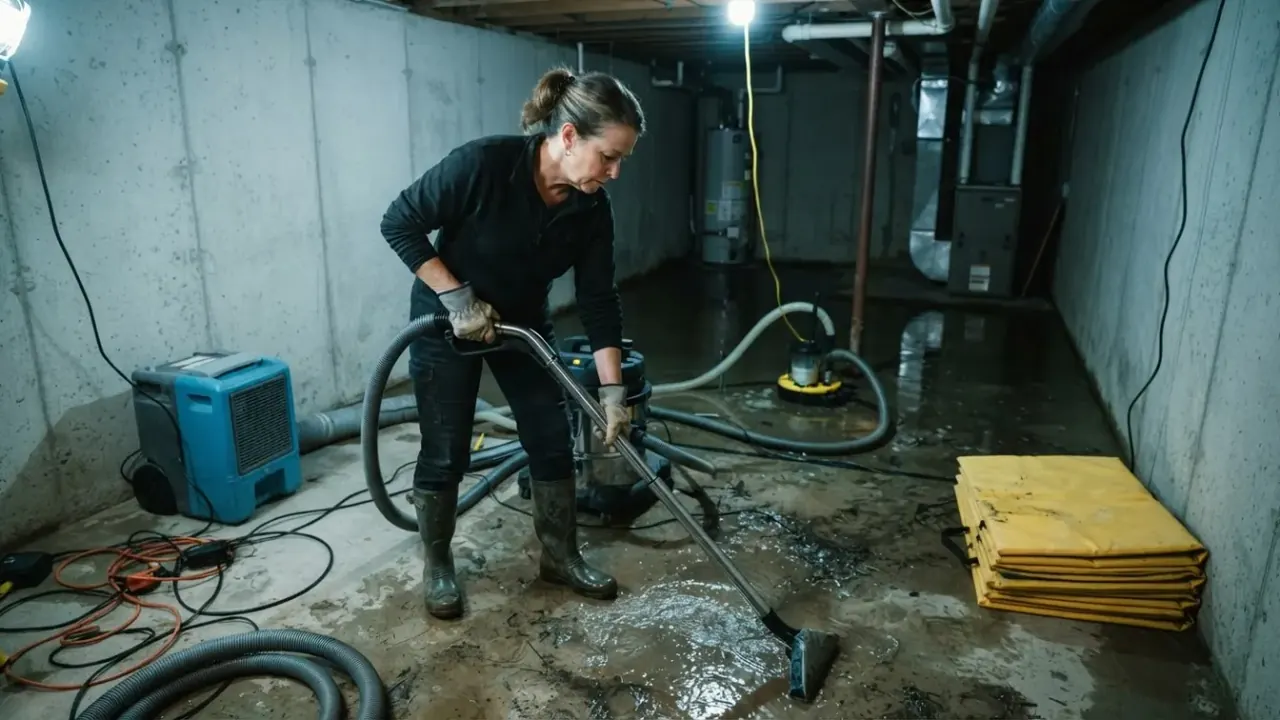
Sewage water extraction removes the standing sewage and contaminated water from your home, while sewage damage restoration repairs and rebuilds everything that water ruined - drywall, flooring, baseboards, insulation, and structure. Extraction is the emergency first step that happens within hours; restoration is the longer rebuild-and-sanitize phase that follows. Most Bothell backups need both, and knowing which one you're looking at tells you whether you're dealing with a two-hour job or a two-week one.
Below we break down what each phase actually does, which comes first, how long each takes in Bothell, and the mistakes we see homeowners make when they try to skip a step.
The short answer: extraction removes, restoration rebuilds
Sewage water extraction vs sewage damage restoration is the difference between pulling water out and putting your home back together. Extraction is a removal service. Restoration is a repair and rebuild service.
Extraction uses truck-mounted pumps, wet vacuums, and weighted extraction heads to pull Category 3 (black water) out of carpets, subfloors, and concrete. Restoration picks up where extraction stops: cutting out contaminated drywall, replacing soaked flooring, treating framing with antimicrobials, running drying equipment until moisture readings hit normal, and rebuilding the surfaces we removed.
One is measured in hours. The other is measured in days. If you call us for sewage backup cleanup bothell WA, we usually start extraction the same day and move into restoration once the structure is dry enough to rebuild.
What sewage water extraction actually involves
Sewage water extraction is the physical removal of contaminated water, solids, and debris from the affected area - it's the phase that stops the damage from spreading. Here's what a real extraction job looks like in a Bothell home.
- Containment. We set plastic barriers and negative air pressure so sewage aerosol doesn't drift into clean rooms.
- PPE and staging. Full-face respirators, Tyvek suits, and boots. Truck staged outside with hose runs through the nearest door.
- Standing water removal. Truck-mounted extraction units pull 10-30 gallons per minute depending on hose length and lift.
- Solids and debris. Anything the pump can't take - wipes, paper, sludge - gets bagged and hauled out.
- Sub-surface extraction. Weighted heads pull water out of carpet padding and the top of the subfloor. Carpet that's been soaked with black water almost always comes out.
- Moisture mapping. We mark wet zones with a thermal camera and pin meter so the drying plan is based on numbers, not guesses.
Extraction alone doesn't make a space safe. It makes it dry enough to start the restoration work. If a technician tells you the job is done after extraction, that's a red flag.
For jobs where the water is still rising or the source isn't controlled, we run emergency sewage removal bothell WA first - stop the source, then extract.
What sewage damage restoration actually involves
Sewage damage restoration is the cleanup, sanitization, drying, and rebuild that makes a contaminated space safe and whole again. It's the phase that turns a wet, smelly room back into a room you can use.
Restoration typically includes:
- Demolition of contaminated materials. Baseboards, drywall up to the flood line (usually 12-24 inches above the highest wet mark), vinyl, laminate, and any carpet that touched black water.
- Antimicrobial treatment. EPA-registered disinfectants applied to framing, subfloor, and concrete. Category 3 water carries bacteria, viruses, and parasites - this step isn't optional.
- Structural drying. Air movers and dehumidifiers running 3-5 days until moisture content drops below 16% on wood and 4% on concrete.
- Odor control. Hydroxyl generators or thermal fogging to kill the smell at the source, not mask it.
- Rebuild. New drywall, baseboards, paint, flooring, and trim. This is where the job stops looking like a disaster zone.
Restoration is where the real cost lives. Extraction might run a few hundred dollars; full restoration of a finished basement can run into the thousands. We quote both phases upfront so you're not surprised halfway through.
Which comes first: sewage extraction or restoration in Bothell WA?
Extraction always comes first. You cannot restore a structure that's still full of contaminated water.
The sequence is fixed: stop the source, extract the water, remove contaminated materials, sanitize, dry, then rebuild. Skipping ahead - say, replacing drywall before the framing is dry - traps moisture behind the new wall and grows mold within 48-72 hours.
There's one exception worth knowing. If the backup is small and contained - a toilet overflow that stayed on tile, for example - extraction and restoration can overlap in a single visit. We'll extract, sanitize, and dry the same day, then check moisture 24 hours later before calling it done. That's the case for most toilet overflow cleanup bothell WA calls where the water never reached carpet or drywall.
Anything larger, or anything that touched carpet, drywall, or a basement floor drain, runs the full two-phase process.
How long does each sewage process take in Bothell, Washington?
Extraction usually takes 2-6 hours for a typical Bothell home. Restoration takes 3-10 days depending on how much material has to come out and how fast the structure dries.
Here's the honest breakdown we give customers:
- Extraction: 2-4 hours for a bathroom or laundry backup, 4-6 hours for a finished basement with carpet.
- Demolition and sanitization: 1 day.
- Structural drying: 3-5 days. Bothell's fall and winter humidity slows drying - we run dehumidifiers longer here than we would in Eastern Washington.
- Rebuild: 2-5 days for drywall, paint, and flooring.
Total from call to finished: 5-10 days for most jobs. If someone promises a full restoration in 48 hours, they're either skipping the drying step or planning to rebuild over wet framing.
We see this pattern constantly in older neighborhoods near the river, where 1960s-1980s construction used cast iron drain lines that are now 40+ years old. Homes in sewage backup cleanup in Downtown Bothell tend to have shallower basements and tighter crawl access, which adds a day to the drying phase.
When do you need sewage water extraction vs restoration in Bothell?
You need extraction when there's standing or soaked-in sewage water that has to come out now. You need restoration when the water is gone but the materials it touched are still contaminated, wet, or damaged.
Quick test:
- Extraction only: Water is still present. Backup was on sealed tile or concrete. Nothing porous got wet.
- Extraction + restoration: Carpet, drywall, baseboards, or insulation got wet. The smell lingers after the water is gone. The backup came up through a floor drain or toilet with solids.
- Restoration only (rare): Someone already extracted the water but didn't sanitize or dry - we get called in a week later for mold.
Category 3 water - anything from a sewer line - is never a "dry it and hope" situation. Even if the surface feels dry, bacteria and odor stay in the material until it's treated or removed.
What to watch out for after a sewage backup
The biggest mistake we see is treating a sewage backup like a clean-water leak. They are not the same job, and the shortcuts that work for a burst supply line will make a sewage backup worse.
Watch for these:
- Running a shop vac and calling it done. A shop vac pulls surface water. It does nothing for the sewage that soaked into the pad and subfloor.
- Skipping the antimicrobial. Disinfectant isn't a smell treatment - it's what kills the bacteria left behind after extraction. Without it, you're rebuilding on a contaminated surface.
- Rebuilding before drying is verified. New drywall over wet framing grows mold in 2-3 days. We meter every cavity before closing it up.
- Ignoring the crawl space. In Bothell, water from a first-floor backup often drains into the crawl. If nobody checks it, you get rot and odor for years. That's why we treat crawl space sewage cleanup bothell WA as part of the same job, not a separate one.
- Assuming insurance will cover it. Most homeowner policies cover sudden sewage backup only if you have the endorsement. Check your policy before you sign anything.
When to call a professional
Call us the moment the water stops rising. Sewage contamination gets worse with time - bacteria multiply, odor sets into framing, and mold starts within 48-72 hours.
You should call Sewrage backup Pros if any of these are true:
- The backup came from a toilet, floor drain, or sewer line - not a clean supply line.
- More than a few square feet of carpet or drywall got wet.
- You can smell sewage after the water is gone.
- The water reached a basement, crawl space, or finished lower level.
- Anyone in the house has a compromised immune system, is pregnant, or is very young or elderly.
We handle the whole sequence - extraction, demolition, sanitization, drying, and rebuild - so you're not coordinating three different contractors. One crew, one scope, one invoice.
Frequently Asked Questions
What is the difference between sewage water extraction and sewage damage restoration?
Extraction removes the standing sewage water and contaminated debris - it's a 2-6 hour emergency service. Restoration repairs and rebuilds what the water damaged, including demolition, sanitization, drying, and reconstruction, and takes 3-10 days. Extraction stops the spread; restoration makes the space safe and whole again.
Do I need sewage water extraction or restoration in Bothell?
You need extraction if water is still standing or soaked into materials. You need restoration if carpet, drywall, or insulation got wet, or if the smell lingers after the water is gone. Most Bothell backups that reach a finished room need both phases, done in sequence.
Which comes first, sewage extraction or restoration in Bothell WA?
Extraction always comes first. You can't restore a structure that's still holding contaminated water. The fixed order is: stop the source, extract, remove contaminated materials, sanitize, dry to verified moisture levels, then rebuild. Skipping ahead traps moisture and grows mold within 48-72 hours.
How long does each sewage process take in Bothell, Washington?
Extraction runs 2-6 hours depending on how much water and how far the hose has to reach. Restoration runs 3-10 days total: one day for demolition and sanitization, 3-5 days of drying, and 2-5 days of rebuild. Bothell's fall and winter humidity usually pushes drying toward the longer end.
Can I just extract the water myself and skip restoration?
Only if the backup stayed on sealed tile or concrete and nothing porous got wet. If carpet, drywall, baseboards, or a crawl space was involved, DIY extraction leaves bacteria and moisture behind. That's what turns a one-week job into a mold remediation project a month later.
Get help with sewage backup cleanup in Bothell
If you're standing in a wet room right now, the clock is running. We extract, sanitize, dry, and rebuild - one crew, start to finish, with upfront pricing before we start.
Call Sewrage backup Pros at 425-903-5051 and we'll tell you on the phone whether you're looking at extraction alone or the full restoration process.